Reading Theme:
Astronomy Definition: Study of Stars and Planets
Meaning 1:study of stars and planets (astronomy)
astronomy
/əˈstrɒnəmi/
n.
The science of studying things in space like stars, planets, and galaxies.
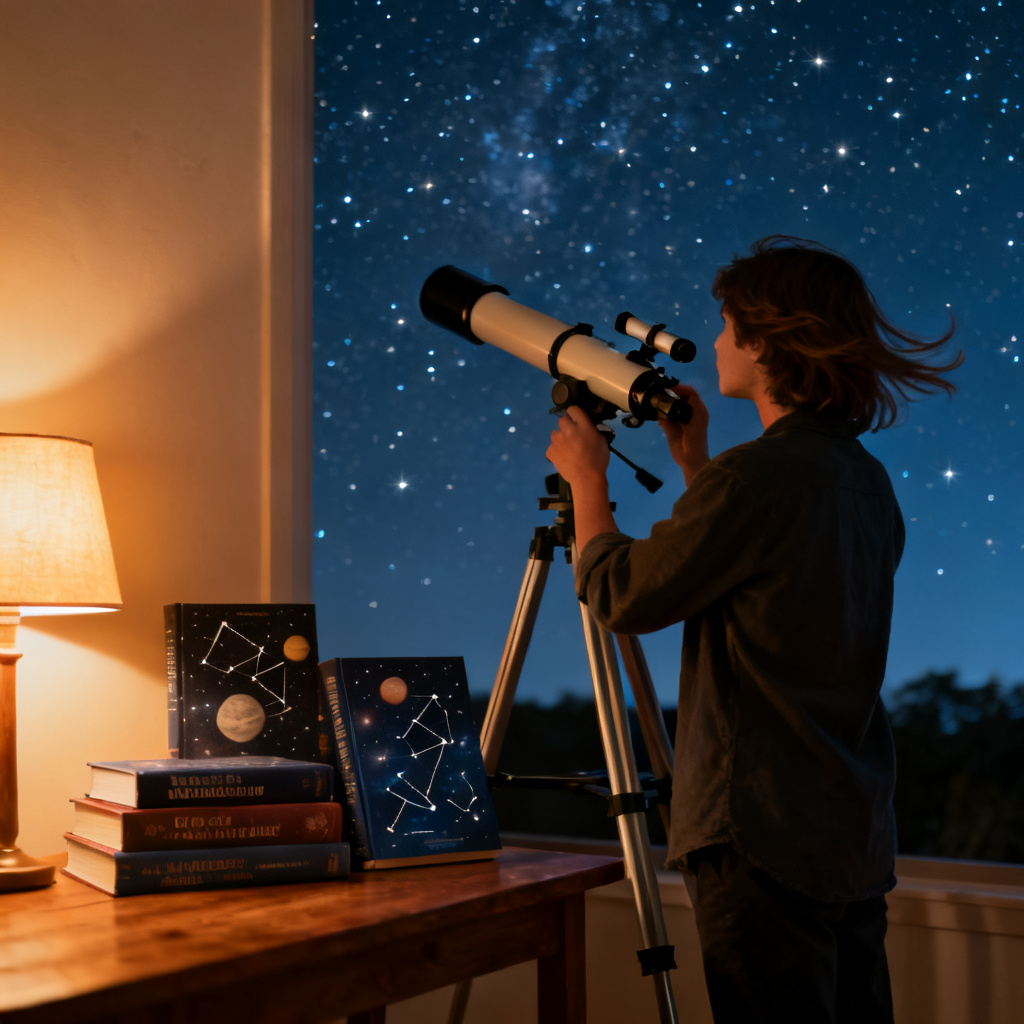
study of stars and planets
➕
/ˈstʌdi əv stɑːrz ænd ˈplænɪts/
n.
Astronomy is the branch of science that deals with celestial objects, space, and the physical universe as a whole.
📘 Details & Usage
📖 Root Explanation
Greek: 'astron' (star) + 'nomos' (law) → 'star law'.
💡 Mnemonic
Think of 'astro' (star) + 'nomy' (arrangement) = the arrangement of stars.
📖 Example
Astronomy has always fascinated my younger brother; he spent weeks drawing a detailed map of the solar system.
Astronomy has always fascinated my younger brother; he spent weeks drawing a detailed map of the solar system.
🔗 Collocations
amateur astronomy – the practice of astronomy by hobbyists
astronomy club – a group of people who share an interest in astronomy
modern astronomy – the contemporary study of the universe using advanced technology
🔄 Synonyms
astrophysics (n.) – the branch of astronomy that deals with the physical properties of celestial objects
cosmology (n.) – the study of the origin and evolution of the universe
celestial mechanics (n.) – the branch of astronomy that deals with the motions of celestial bodies
🌱 Derivatives
astronomer (n.) – a person who studies astronomy
astronomical (adj.) – relating to astronomy; extremely large
astronomically (adv.) – in an astronomical manner; extremely
📖 Cultural Story
Astronomy originates from Greek astron (star) and nomos (law), referring to the systematic study of celestial bodies. Ancient Greeks like Ptolemy laid its foundations.
Wordbook
Your data is saved in this browser