Reading Theme:
Analogy: Definition, Examples, and How to Use It (2 meaning)
Meaning 1:comparative explanation (analogy)
analogy
/əˈnælədʒi/
n.
A way of explaining something by comparing it to something else that is similar in some way.

comparative explanation
➕
/kəmˈpærətɪv ˌekspləˈneɪʃn/
n.
A teaching or explanatory tool that clarifies a complex or abstract idea by likening it to a simpler, more familiar concept that shares key similarities.
📘 Details & Usage
📖 Root Explanation
From Greek 'analogia' (proportion, correspondence), from 'ana-' (upon, according to) + 'logos' (ratio, word, reason).
💡 Mnemonic
Think: 'ANA' (upon) + 'LOG' (word/reason). Putting one idea UPON another based on similar LOGic.
📖 Example
The teacher used the analogy of a computer to explain how the human brain processes information.
The teacher used the comparative explanation of a computer to describe the information processing of the human brain.
🔗 Collocations
draw an analogy – To make a comparison between two things.
use an analogy – To employ a comparison for explanatory purposes.
a useful analogy – A comparison that is particularly helpful for understanding.
🔄 Synonyms
metaphor (n.) – A figure of speech that describes something by stating it is something else, implying a comparison.
comparison (n.) – The act of considering the similarities between two or more things.
simile (n.) – A figure of speech comparing two different things using 'like' or 'as'.
🚫 Antonyms
contrast (n.) – The state of being strikingly different from something else.
literal statement (n.) – A description that uses words in their ordinary, most basic sense without metaphor or comparison.
🌱 Derivatives
📖 Cultural Story
The term originates from Ancient Greek mathematics and rhetoric, referring to a proportionate relationship or a form of reasoning. It entered English via Latin in the 16th century. A key modern use is in logic and computer science, where reasoning by analogy is a fundamental method for problem-solving and artificial intelligence.
Meaning 2:logical inference (analogy)
analogy
/əˈnælədʒi/
n.
A method of reasoning where you conclude that if things are similar in some ways, they might be similar in other ways too.
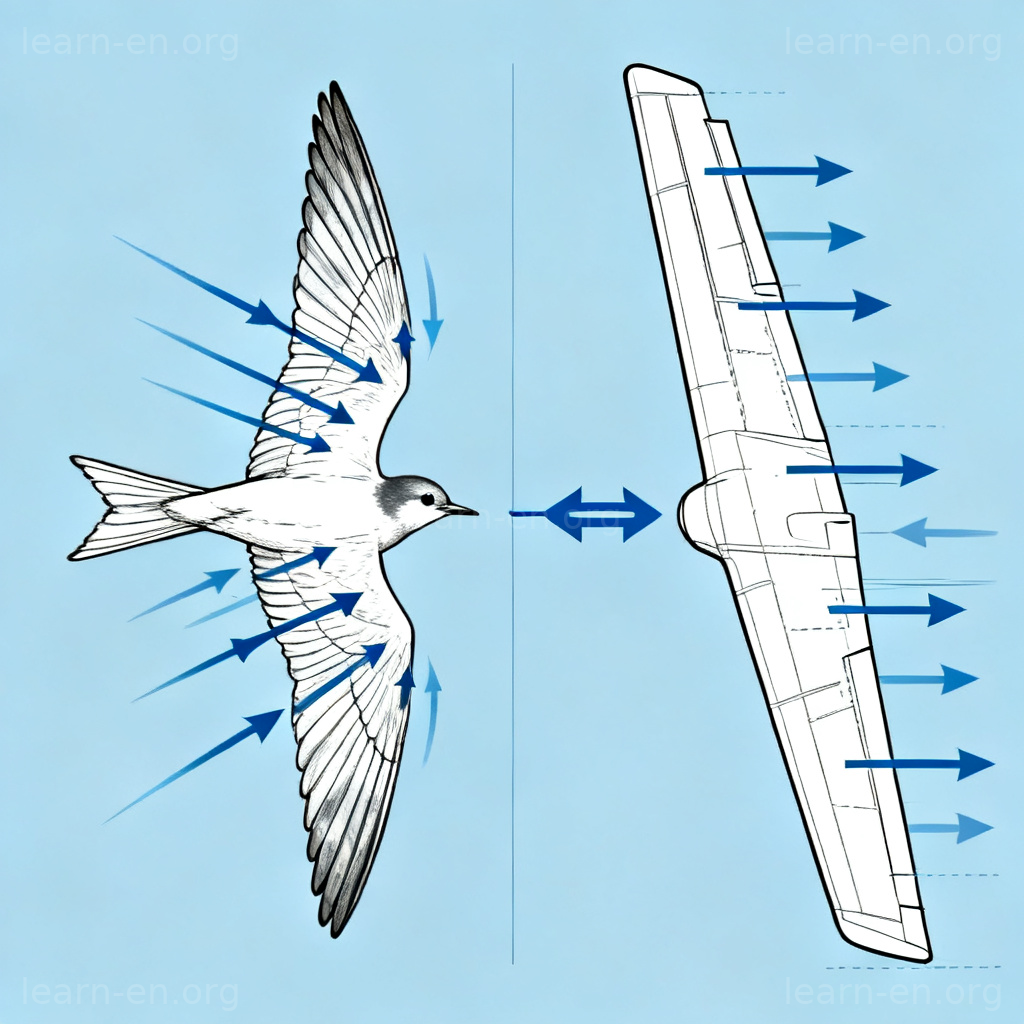
logical inference
➕
/ˈlɒdʒɪkl ˈɪnfərəns/
n.
A method of reasoning or argument where one concludes that because two things are alike in certain known aspects, they will also be alike in other, unknown aspects.
📘 Details & Usage
📖 Example
By analogy with how birds' wings work, engineers designed more efficient airplane wings.
Using logical inference from the workings of birds' wings, engineers created more efficient airplane wings.
🔗 Collocations
by analogy – Using a process of reasoning based on similarity.
reason by analogy – To draw conclusions using comparative reasoning.
a false analogy – An invalid comparison where the similarities are superficial or misleading.
🔄 Synonyms
parallel (n.) – A similarity or comparison between two different things or situations.
correspondence (n.) – A close similarity, connection, or equivalence.
inference (n.) – A conclusion reached on the basis of evidence and reasoning.
🚫 Antonyms
deduction (n.) – Reasoning from general principles to a specific, logically certain conclusion.
dissimilarity (n.) – The quality of being unlike or different.
🌱 Derivatives
analogical (adj.) – Of or based on analogy.
Wordbook
Your data is saved in this browser