Reading Theme:
Acrobatic: Definition, Usage & Examples
Meaning 1:graceful and athletic (acrobatic)
acrobatic
/ˌæk.rəˈbæt.ɪk/
adj.
related to movements that are very skillful and require great physical control, like flips and balancing.
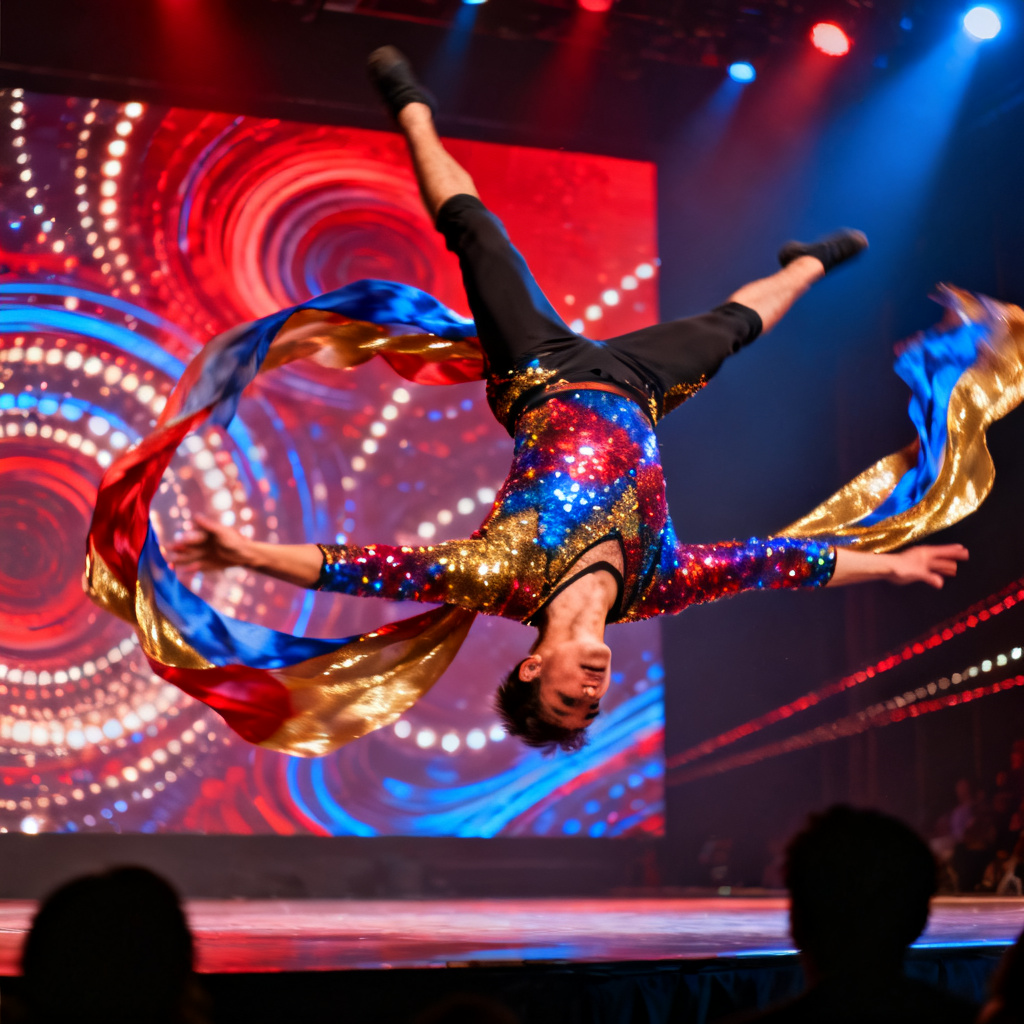
graceful and athletic
➕
/ˈɡreɪs.fəl ənd æθˈlet.ɪk/
adj.
Describes movements or performances that showcase impressive physical skill, agility, and balance, often seen in gymnastics or circus acts.
📘 Details & Usage
📖 Root Explanation
From Greek 'akrobatos' (walking on tiptoe) via French 'acrobate'.
💡 Mnemonic
Acro (high) + bat (bat flips) + ic → imagine a bat performing high flips.
📖 Example
The street performer's acrobatic flip over the bench drew cheers from the crowd.
The street performer's acrobatic flip over the bench drew cheers from the crowd.
🔗 Collocations
acrobatic feat – an impressive display of physical skill and daring
acrobatic maneuver – a complex and skillful movement requiring great control
acrobatic skills – the abilities related to performing gymnastic or balancing acts
🔄 Synonyms
🚫 Antonyms
clumsy (adj.) – moving or acting in an awkward way
awkward (adj.) – lacking grace or skill in movement or performance
uncoordinated (adj.) – lacking physical coordination or the ability to perform smooth movements
🌱 Derivatives
acrobatically (adv.) – in a manner that involves acrobatic skill
acrobat (n.) – a performer who executes acrobatic feats
📖 Cultural Story
Derived from the Greek 'akrobatos', meaning 'walking on tiptoe'. It originally described ancient performers who walked ropes or performed at great heights, emphasizing skill and balance. The word entered English via French in the early 19th century, specifically associated with the circus arts.
Wordbook
Your data is saved in this browser