Reading Theme:
Aboriginal: Definition, Examples, and Usage Guide
Meaning 1:native to a region (aboriginal)
aboriginal
/ˌæb.əˈrɪdʒ.ən.əl/
adj.
Describing people, animals, or plants that have been in a place from the very beginning, long before others arrived.
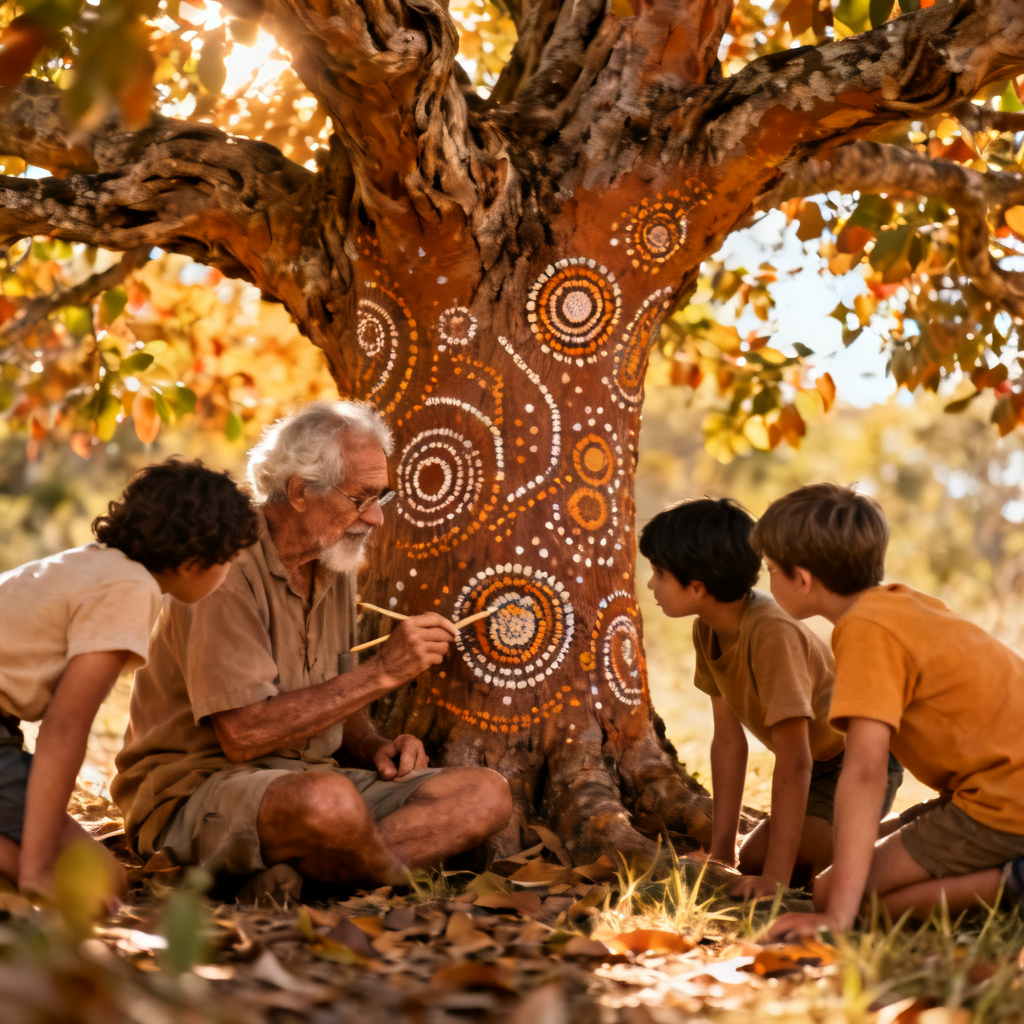
native to a region
➕
/ˈneɪtɪv tə ə ˈriːdʒən/
adj.
Refers to the first known inhabitants of a region, typically humans, but also animals and plants that are native and have existed there since the earliest times.
📘 Details & Usage
📖 Root Explanation
Roots: Latin 'ab' (from) + 'origine' (origin).
💡 Mnemonic
Aboriginal = 'a born original' – the first people of a land.
📖 Example
The museum has a special exhibition featuring the art and stories of aboriginal peoples from around the world.
The museum has a special exhibition featuring the art and stories of aboriginal peoples from around the world.
🔗 Collocations
aboriginal people – the original inhabitants of a region
aboriginal culture – the traditions and customs of native peoples
aboriginal land – territory traditionally owned or occupied by indigenous groups
🔄 Synonyms
indigenous (adj.) – Originating naturally in a particular place; native.
native (adj.) – Belonging to a particular place by birth or origin.
original (adj.) – First or earliest; existing from the beginning.
🚫 Antonyms
foreign (adj.) – Introduced from or characteristic of another country or region.
non-native (adj.) – Not originating naturally in a particular place.
alien (adj.) – Belonging to a foreign country or culture; unfamiliar.
🌱 Derivatives
aborigine (n.) – An original inhabitant of a land.
aboriginality (n.) – The state or quality of being aboriginal.
📖 Cultural Story
Derived from Latin 'ab origine' (from the beginning), 'aboriginal' first described Australia's native peoples in English. It later broadened to refer to any indigenous inhabitants.
Wordbook
Your data is saved in this browser